Your essential list of hockey terms, an ultimate guide for youth hockey clubs from TeamSnap for Business.
Ultimate Guide for Youth Hockey Terminology
Why is an essential list of hockey terms important? One of the best winter sports in the world, especially for young athletes to try, hockey is loved across the world. Hockey is a great introduction to the world of sports for youth athletes.
If you’re a first-time hockey player or youth hockey parent, a basic understanding of hockey terminology will go a long way in enhancing your knowledge of the sport. Here is a quick guide to essential hockey terms.
Essential List of Hockey Terms
Rink or Ice
The official name for the location where hockey is played. Hockey is a game played on the ice or at the rink and involves ice skates to play.
Puck
A rubber disc is used as the main “ball” or scoring object. Players attempt to shoot the puck past goalkeepers into the opponents’ goal for points.
Net/Goal
A netted object that serves as the main point of defense/offense for each team. The object of the game is to score shots of the puck into their opponents’ goal.
Stick
Hockey sticks are the main pieces of equipment (aside from ice skates) that hockey players use. Players use these long, wooden objects to shoot, pass, and carry the puck across the ice.
Blue Line
A line on the ice that defines the neutral zone and each area of attack for the teams.
Neutral Zone
The area between the blue lines of each attacking zone and center ice. Dubbed the neutral zone.
Checking
Using contact, legally with your body, in attempt to stop an opposing player from advancing the puck.
Wing
An offensive player who lines up near the middle attacking zone of the ice, along the sides.
Center
Middle player on the forward line of a hockey team
Defensemen
Pair of players who defend their goalkeepers and attempt to keep the opposition from getting close or getting shots on the goal.
Goalkeeper
A player in charge of stopping the opposing team from scoring the puck into their net.
Face Off
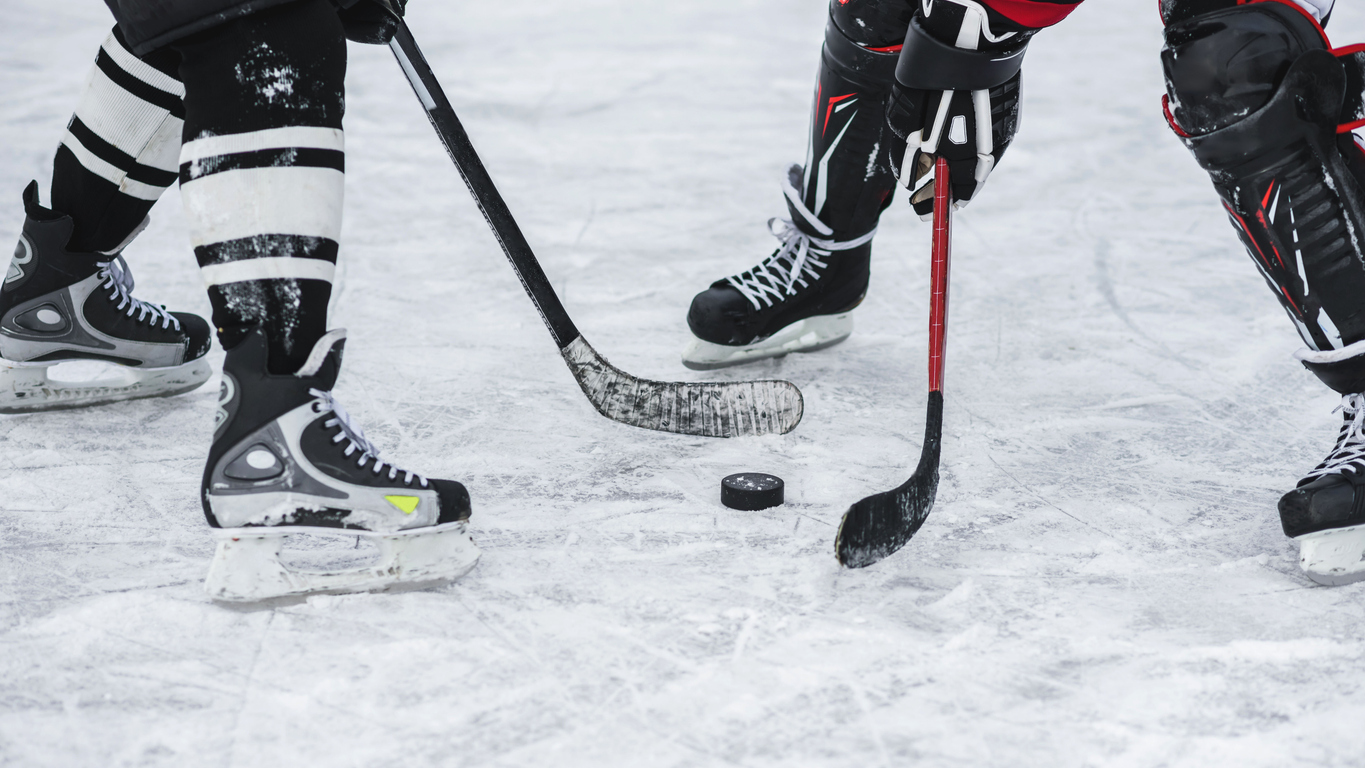
The referee drops the puck between two players of opposing teams, signaling the start or resumption of play.
Power Play
As a result of penalties, one team holds an advantage of the number of players on the ice.
Slap Shot
A powerful shot on goal, in which a player swings their hockey stick aggressively to ensure extra speed and power on their shot.
Hat Trick
When a single player scores at least 3 or more goals in a single game.
Essential Hockey Terms for the Ice
Zamboni
The machine used the groom the ice and playing surface between periods and certain stoppage time.
Crease
An area in front of each goal. Opposing players cannot occupy this zone unless they have control of the puck.
Icing
An infraction by one team, when a player on that team plays the puck over the center red line and then the opposing team’s red goal line and the puck remains untouched without scoring a goal.
Penalty Box
An area of the bench in which players are forced to serve their penalty time, not allowed a return to the ice until penalty time is over.
Boards
The structure surrounding the ice in a hockey rink. Walls that signal the borders of the playing surface.
How do Hockey Divisions for Kids Work
USA Hockey
Youth hockey levels are usually grouped by age in the United States. This includes:
- Mite: Under 8 or 8U
- Squirt: Under 10 or 10U
- Pee Wee: Under 12 or 12U
- Bantam: Under 14 or 14U
- Midget-Minor: Under 16 or 16U
- Midget-Major: Under 18 or 18U
Hockey Canada
Canadian youth hockey also organizes group levels by age. This includes:
- Novice: Under 8 or 8U
- Atom: Under 10 or 10U
- Pee Wee: Under 12 or 12U
- Bantam: Under 14 or 14U
- Midget-Minor: Under 16 or 16U
- Midget-Major: Under 18 or 18U
TeamSnap for Hockey Teams & Clubs
Lots of youth hockey clubs are taking advantage of the right youth sports technology to enhance their ability to enjoy the game we all love. Hockey coaches, parents, and players rely on the TeamSnap mobile app, while youth hockey administrators are turning to TeamSnap for Business run all their administrative tasks from one easy-to-use platform.