Coaches’ Safety Checklist, provided by Guardian Emergency Training who provides safety training for our partner, Philadelphia Youth Sports Collaborative. Steven Devenney of Guardian Emergency Training is nationally recognized in person first aid and CPR certification for multiple staff members. Consider offering this training to athletes over the age of 12. This will protect the coach in the event that the coach has a medical emergency and no other adults are present.
The basics of a safety program and first aid kit essentials:
- Well-equipped first aid kit.
- Automated External Defibrillator (AED)–can be expensive, but refurbished models are often available.
- Emergency contact forms for all staff members and athletes.
- Medical treatment release forms for all staff members and athletes.
- Communications equipment that is sufficiently charged and able to contact emergency services.
- Implement a policy that ensures that all prescribed rescue medication is accessible. Examples are EpiPens and seizure medications.
- Develop a rally point for athletes and staff to evacuate to in the event of a mass violence event. Share this rally point with the athletes and staff. If age appropriate you can share the reason for this rally point with the athletes. If sharing the reason for this rally point is not age appropriate, then just inform the athlete where you want them to run in the event of an emergency.
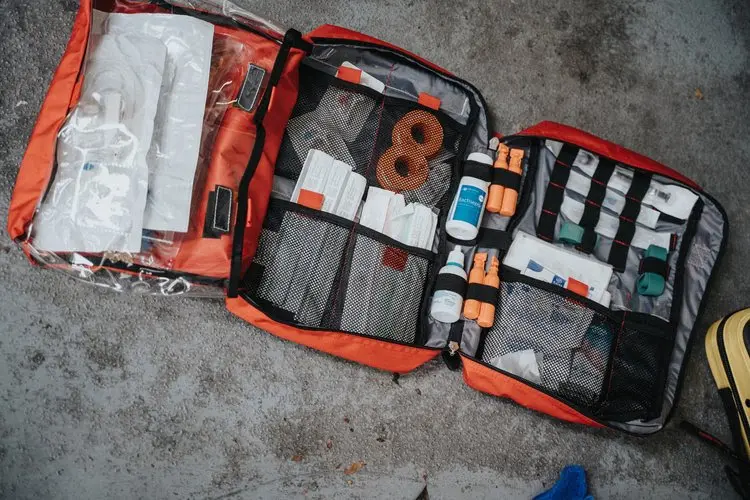
What should your first aid kit look like?
- A first aid kit should be portable. You want to bring the first aid kit to the injury rather than bringing the injury to the first aid kit.
- A first aid kit should be clearly marked and accessible to all occupants of your facility.
- Your first aid kit should have a home. That home should be clearly marked and obvious. The staging of your first aid kit should ensure that the kit does not get buried under other bags or equipment. Ideally the first aid kit should be staged within reach of your AED (Automated External Defibrillator) if you have one.
- Having a visible clearly marked first aid kit or bleeding control kit does not make your facility seem unsafe. It conveys the message that you are prepared. Customers, parents, students and colleagues appreciate preparation.
A first aid kit should include the following items:
- Personal protective equipment (PPE) such as medical gloves and eye protection.
- Combat application tourniquets at least one.
- Oral glucose or another sugary drink.
- One bottle of low-dose aspirin.
- Pocket mask.
- Band aids.
- Assorted gauze.
- Trauma shears.
You should also have the ability to distribute ice to someone with minor injuries.
Guardian Emergency Training can now sell AED’s–if you are interested in purchasing an AED, please consider them.
READY TO START YOUR SEASON?


Blueprint Overview
Scaling a League? Run Your Whole Program on One Secure System.
From scheduling and messaging to payments and statistics, TeamSnap brings everything your team needs under one roof.