World Cup fever broke in July. The news cycle has moved on.
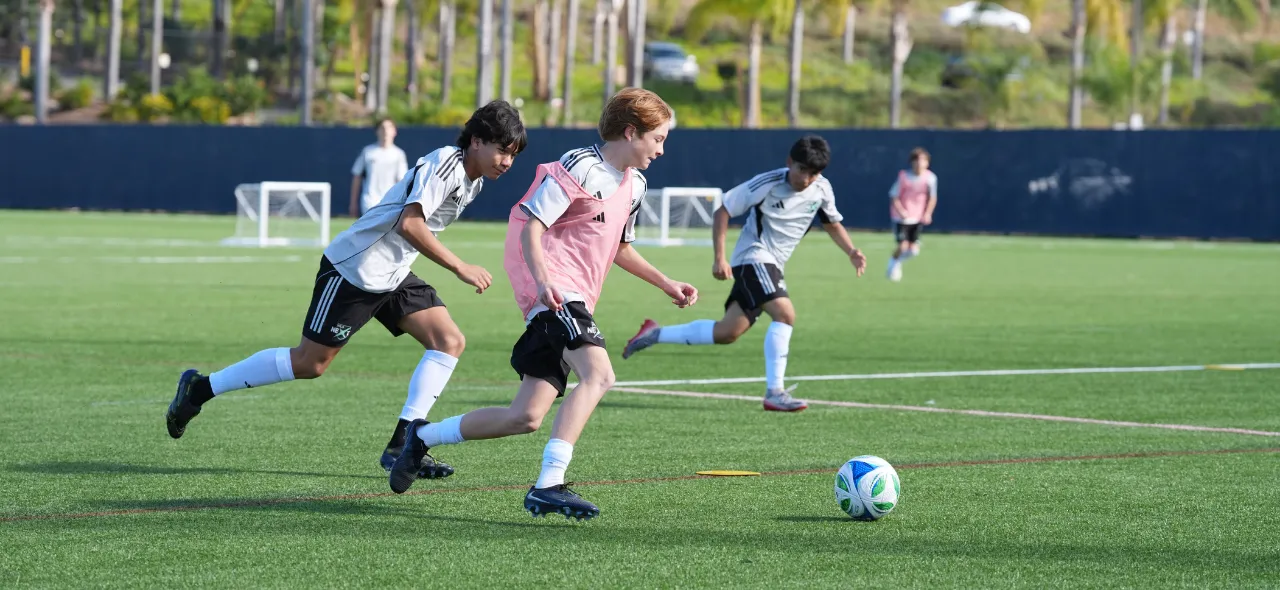
But what matters most in youth sports is not usually in the headlines. It is what happens on the field, on a Tuesday, in a town nobody is covering — and as the fall season winds down, the tournament’s fingerprint has not faded there at all.
Millions of Americans fell in love with soccer this summer. The real test is whether the love follows those fans home, to the kid who wore a national team jersey to practice all fall, and to the one who wanted to but never had a team to join. Kids want to play. Whether they get to is a different question — and it is one all of us in this industry have a hand in answering.
The momentum is real
TeamSnap is the operating system for youth sports in this country — 30 million users since launch, more than 185 million events scheduled, two million people in the app on any given day running the logistics of their kids’ sports lives. When something shifts in youth sports, we tend to see it in the data before it shows up anywhere else.
It shifted.
Our August participation figures for soccer hit a three-year high — a bump that coincided precisely with World Cup timing, and one that does not show up in other year-over-year trends. The soccer organizations on our platform grew their rosters 18% in 2026. Bigger teams to accommodate growing interest.
One platform’s view is never the whole story. The Sports & Fitness Industry Association’s mid-year data found outdoor soccer participation up 6.2% over the opening weeks of the tournament. And other signals point in the same direction.
Our partners at Major League Soccer have doubled down on their investment in growing the game. On the TeamSnap platform alone, MLS GO brings training for recreational youth soccer, and MLS NEXT does the same for elite youth player development. Now any volunteer coach with a phone can reach that top-tier instruction.
U.S. Soccer will spend the next two years absorbing US Youth Soccer, bringing 2.7 million registered players and 54 state associations under the governing body and its U.S. Soccer Pathways Strategy — a development model built explicitly around lowering costs and expanding access.
Despite the hand-wringing when the USMNT left the tournament in the round of 16, this moment feels ripe.
When momentum is not enough
But we have seen this movie twice before. Youth soccer surged after the 1994 World Cup, the tournament that launched MLS two years later. It surged again after the 1999 Women’s World Cup. Both times the sport gained a wave of new players and a window in which to keep them. Both times we saw growth without liftoff, in part because the cost of playing kept climbing.
Families now spend more than $1,000 per child per year on a primary sport, up nearly 50% in five years — and many spend a good deal more. More than two-thirds of parents whose children have played sports say they have seriously considered getting them out. The number one reason? Cost.
So let me be precise about the problem, because it is not the one people usually name. Kids are not the issue. Demand is not the issue. The issue is that the grassroots organizations that have always run local sports — the Little Leagues, the YMCAs, the Boys & Girls Clubs, the parks and recreation departments — have been underinvested in for years. Coaching, safety, transportation, cost: the specific complaint varies by community. The common thread is always underinvestment.
When those programs fall short, families with means find another way, joining a travel team or a private club. Families without means have no fallback. When the community program disappears, their children are not trading down to a cheaper option. They are not playing at all.
The data bears this out. Some 67% of parents say affordable and public-school options have declined over the past five years, according to The Good Sports Cost of Play Index. The consolidation that accelerated through COVID — small recreational leagues closing, costs concentrating in private programs — did not simply make soccer more expensive. It removed the only on-ramp a great many families ever had. For them, the local rec league is not one option among several. It is the path, or there is no path.
A cultural moment can get a 9-year-old onto a field. It cannot pay her registration fee in year three.
Growing the game means investing where it starts
Access is the whole game right now. The interest is there. The question is whether a child whose family cannot absorb $1,000 or more a season ever gets the chance to act on it.
That question of access will be answered by all of us — by the businesses, the leagues, the governing bodies, and the policymakers who shape what it costs to play.
That is why we put our support behind the STRONG Kids Act. It would fund grassroots sports entirely out of existing sports-wagering excise tax revenue — no new cost to taxpayers — and direct that money where the need actually is: the local programs serving the families with the fewest alternatives. The STRONG Kids Act is a milestone in a six-year, dual-track effort led by the FundPlay Foundation, and supported by nonprofit and for-profit leaders across youth sports who agree on the need to increase access and participation.
Policy and public investment are just one piece of the puzzle, though. With the right intention, brands belong in this conversation, too.
Brands will have no shortage of opportunities over the next five years. Brazil in 2027. Los Angeles in 2028. A World Cup back on this continent in 2031. They will spend heavily to be part of those moments, for good reason. Big events forge real connections between brands and fans.
Yet to be frank, many of them are about to get this wrong. They will do what they have always done: show up in the moment, buy the most expensive real estate at the finish line, and leave.
But the families making real sacrifices to keep their children playing notice who helps them and who does not. When a brand reduces a registration fee or sponsors a league, that is not marketing — it’s relief. When a brand rewards the tireless coaches at the center of this ecosystem, it is investing where it matters.
We have tried to hold ourselves to that same standard. Through brand sponsorships, grants, and affordability initiatives, TeamSnap has put more than $20 million back into the youth sports community, helping children play who could not otherwise afford to. That earns a different kind of trust than a 30-second television spot.
The time is now
Is American soccer about to take over? The next five years will give us plenty of chances to test the theory.
But I would measure this moment differently. The question is not how many children sign up in the month after a final. It is how many are still on a team when the World Cup comes back to this continent in 2031.
The state of youth soccer in this country, in November 2026, is ready. Demand is unmistakable. A generation of kids just watched the best tournament of their lives and wants to play.
That readiness is not a permanent condition. It is a window, and it is about five years wide.
We ask a great deal of the people who make youth sports work: the coaches who stay late, the volunteers who line the fields, the parents who drive across three counties on a Saturday morning. The least the rest of us can do is make sure there is somewhere for their kids to play.
That, in the end, is what this is about. Not the tournaments. The teams.
Every kid deserves a team to show up for. Let’s make sure there is one waiting.